
Understanding Collagen, Timing, and the Hybrid Advantage
Every season affects your skin differently.
In Ventura County, March marks the quiet beginning of what we call laser season. The air is starting to warm, but the intensity of summer sun hasn’t arrived yet. It’s a small window — and an important one — especially if you’re considering laser resurfacing.
By late spring and early summer, UV exposure rises quickly along the coast. Average daily sun hours increase from roughly 7 hours in March to over 9 hours by May. The UV index also climbs, moving from moderate levels in early spring to consistently high levels as summer approaches.
That increase matters.
Deeper resurfacing treatments like CO2 and Hybrid laser resurfacing require careful sun management during healing. Starting in March allows your skin to recover in a lower-UV environment and gives collagen time to rebuild before peak sun season arrives.
But timing is only part of the story.
To understand why March is ideal for laser resurfacing in Ventura, you need to understand collagen.
Collagen Is the Foundation of Firm, Resilient Skin
Collagen is the structural protein that keeps skin firm, smooth, and strong. It supports elasticity, maintains thickness, and influences how evenly light reflects off your face.
In our 20s, collagen production is steady and abundant. In our 30s and 40s, production gradually declines. Skin may start to feel thinner. Fine lines linger. Texture becomes less even. Elasticity softens.
This change is gradual — and meaningful improvement must be gradual as well.
Laser resurfacing isn’t about aggressively removing skin. When performed properly, it’s about controlled collagen stimulation. It’s about signaling your skin to rebuild itself with intention.
What Happens After a Hybrid Laser Treatment
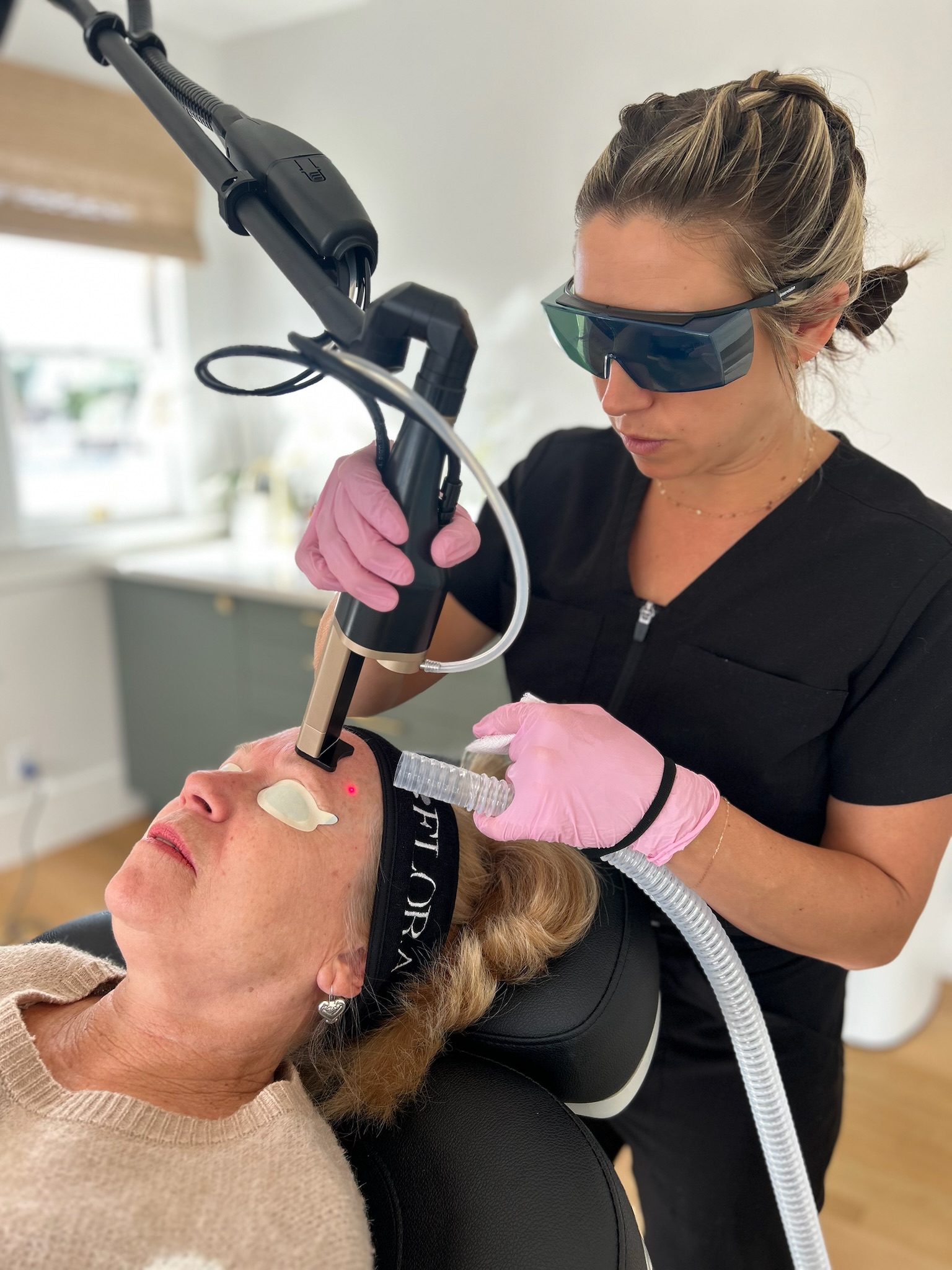
At Flora Aesthetics & Wellness in Ventura, our Hybrid laser resurfacing treatment combines two technologies in one platform:
CO2 laser resurfacing to refine the outer layers of skin
1570 nm energy to stimulate collagen deeper in the dermis
The CO2 component improves tone and texture by creating precise micro-columns in the surface. The 1570 wavelength heats deeper layers without fully ablating the skin, activating fibroblasts — the cells responsible for producing new collagen.
Here’s how that process unfolds over time.
Weeks 1–2: Surface Renewal
Redness gradually settles. Damaged cells shed. Texture feels smoother. Pigment begins to lift. Skin often looks brighter within the first couple of weeks.
Weeks 3–6: Collagen Activation
Fibroblasts increase activity. New collagen production begins beneath the surface. This phase is quiet but critical.
Weeks 8–12: Structural Strengthening
New collagen fibers reorganize and strengthen. Skin appears firmer. Tone looks more even. The overall quality of the skin improves in a way that feels subtle but significant.
This is why we say collagen takes time.
A single laser resurfacing treatment can create visible refinement. A series of treatments allows us to layer stimulation strategically for more comprehensive structural improvement.
Why We Recommend Laser Resurfacing in March in Ventura County
There are three main reasons we encourage patients to begin laser resurfacing in early spring.
1. Lower UV Exposure
In March, Ventura’s UV index is typically moderate compared to the high and very high levels seen in late spring and summer. Lower UV exposure reduces the risk of post-inflammatory hyperpigmentation during healing, especially for patients with pigment concerns.
2. Manageable Sun Hours
Average daylight increases steadily from March to May. By starting in March, patients can complete healing before longer beach days, vacations, and high-exposure outdoor events become routine.
3. Collagen Development Window
Collagen remodeling takes 8 to 12 weeks. If your goal is smoother, firmer skin by early summer, beginning treatment in March allows results to mature naturally by June or July.
Laser resurfacing is not an instant treatment. It is a progressive one.
Who Is Hybrid Laser Resurfacing Ideal For?
Hybrid Moderate Face + Neck is well suited for patients experiencing:
Uneven tone and sun damage
Fine lines and early laxity
Acne scarring
Rough or dull texture
Preventative collagen support
Because the Alma Hybrid platform is customizable, treatment settings are adjusted based on skin type, goals, and tolerance for downtime. This is not a one-size-fits-all CO2 laser treatment. It is a personalized resurfacing strategy.
Frequently Asked Questions About Laser Resurfacing in Ventura
How much downtime should I expect?
Most patients experience redness and mild swelling for several days. Social downtime typically ranges from three to five days depending on intensity and individual healing.
When will I see results?
Surface refinement is often noticeable within one to two weeks. Collagen-based improvements continue developing for up to twelve weeks after treatment.
Is one treatment enough?
One session can create visible improvement. A series produces more meaningful long-term structural change, especially for pigment and firmness concerns.
Can I combine laser resurfacing with injectables?
Yes. Neuromodulators, filler, PRF, and other regenerative treatments can be strategically timed with laser resurfacing to maximize safety and results.
The Refined Season
Laser resurfacing in Ventura isn’t about chasing dramatic change. It’s about strengthening the foundation of your skin in the right season.
Controlled stimulation.
Strategic resurfacing.
Gradual collagen rebuilding.
We don’t rush skin.
We refine it.
If you’re considering laser resurfacing this year, March is your window.
0 Comments